
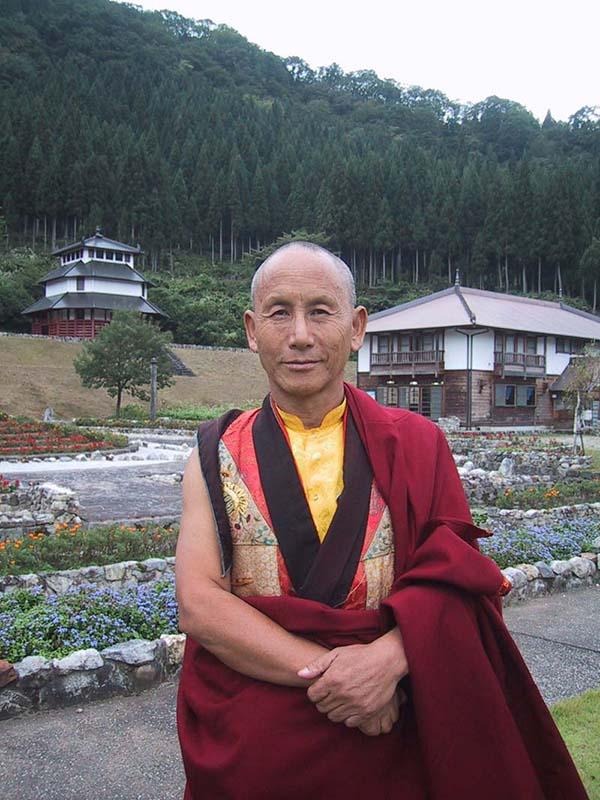
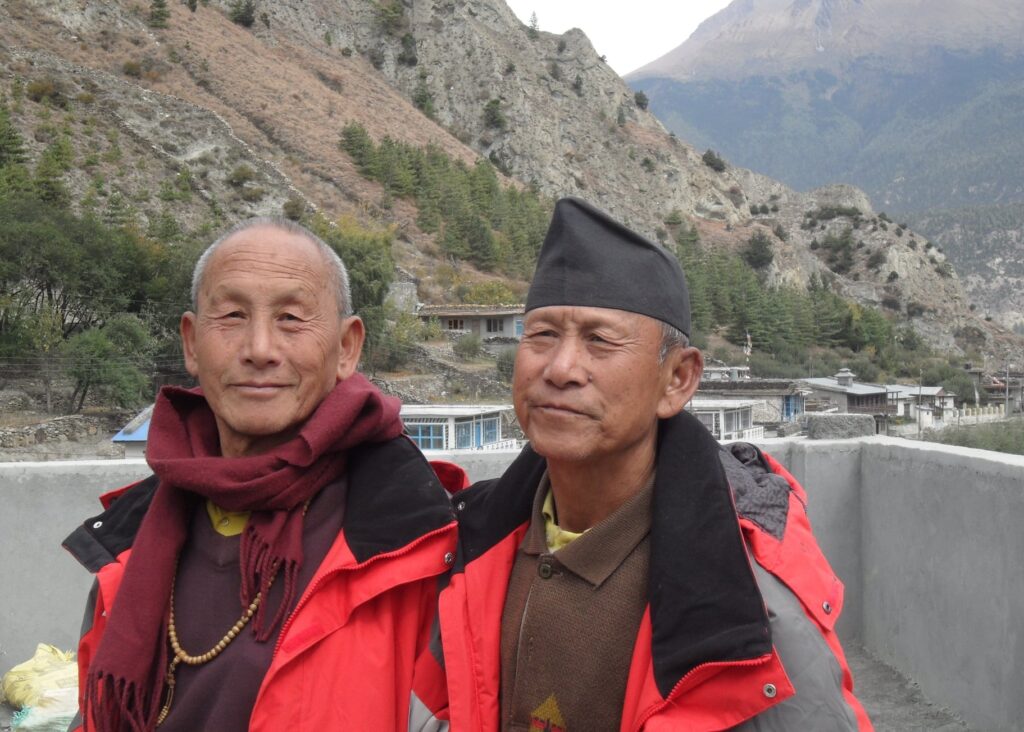
There are many traditional artists who make beautiful Thangka and Paubha in Himalayan Region, and there are artists whose entire life becomes an act of devotion. Lama Shashi Dhoj Tulachan belongs to the second kind. Born into a lineage of Buddhist artists in the high valleys of Mustang, he has spent over seven decades as a monk, a master craftsman, a restorer of sacred spaces, and an ambassador of a tradition that the modern world is only beginning to fully appreciate.
For centuries, the Himalayan belt of Nepal has been a cultural meeting point, attracting traders, pilgrims, and monks from Tibet, India, and beyond. This convergence of people and ideas created a dynamic environment where local artists and artisans absorbed diverse influences and experimented with new techniques. They produced art forms that reflected both regional identity and broader Himalayan traditions.
Among the areas shaped by such exchange is Tukuche, a historic settlement along the Kali Gandaki River in Mustang. Once a bustling hub on the trans-Himalayan salt trade route, the village was a center of commerce, culture, and Buddhism. It is also the birthplace of Lama Shashi Dhoj Tulachan, a revered monk and master of Buddhist art.
Born in 1942 into a lineage of household monks and Buddhist artists, Lama Shashi Dhoj inherited this sacred art form from his father, Kamal Dhoj and grandfather, Paiima Tenjing, whose collective work adorns the monasteries, chortens, and private shrines of the Thak Kola region in the upper Kali Gandaki to this day.
Also recognized by the spiritual name Guru Nawang Chhogyal Tenzin, he is the spiritual leader of Chhairo Gompa of the Nyingma tradition as well as Sambha Gompa of the Karmapa/Kagyu tradition, Rani Gompa, and Mahakala Gompa; four sacred sites whose care and continuity he has taken as a personal responsibility in Mustang. He is widely known for his mural sized thangka paintings and exquisite statues.
An Artistic Journey
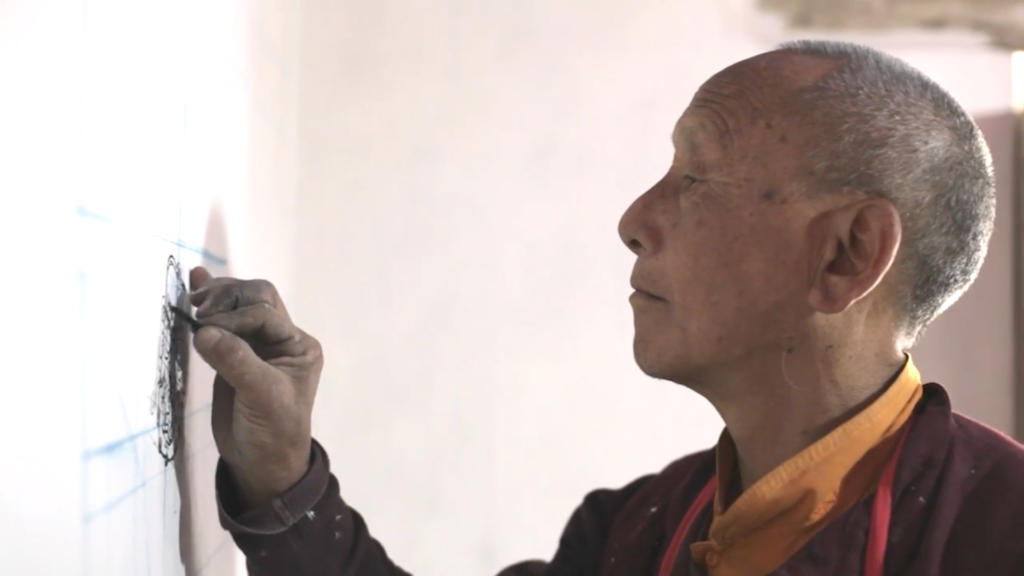
Lama Shashi Dhoj started his artistic journey at the tender age of nine, assisting his father and elder brother, Krisna Dhoj Tulachan on sacred art projects throughout Mustang. At the age of 18, he undertook his first solo assignment of painting the Mani Lha K’an in Gemi village at Mustang. By 22, he had mastered the intricate art of Thangka painting under the guidance of Kham Kyutba (Lekdu), specializing in Menri as well as Karmagadri, Chheytoyba, and Changdi styles.
Beyond Thangka, he has also sculpted statues for monasteries in Lumbini and designed the central Buddha Statue and the entire architectural complex of the Karma Samtenling Monastery. His work is never confined to a single medium or scale. Whether working on a portable scroll or a monumental mural, whether carving stone or grinding mineral pigments for paint, the intention is constant: to give form to the sacred, and through that form, to serve.
Recognition Beyond the Mountains
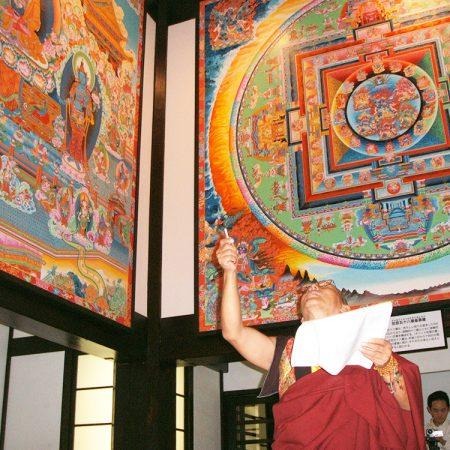
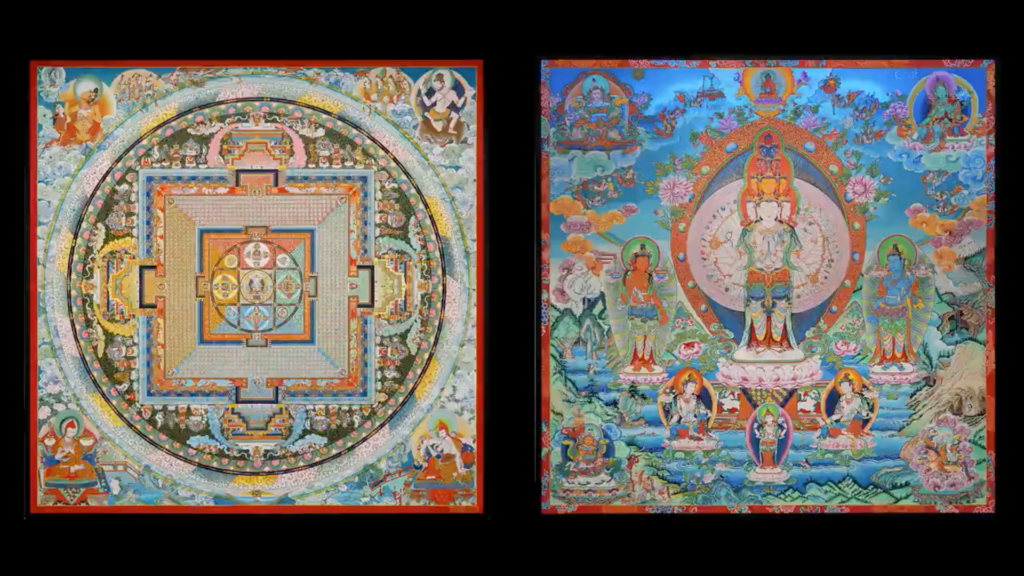
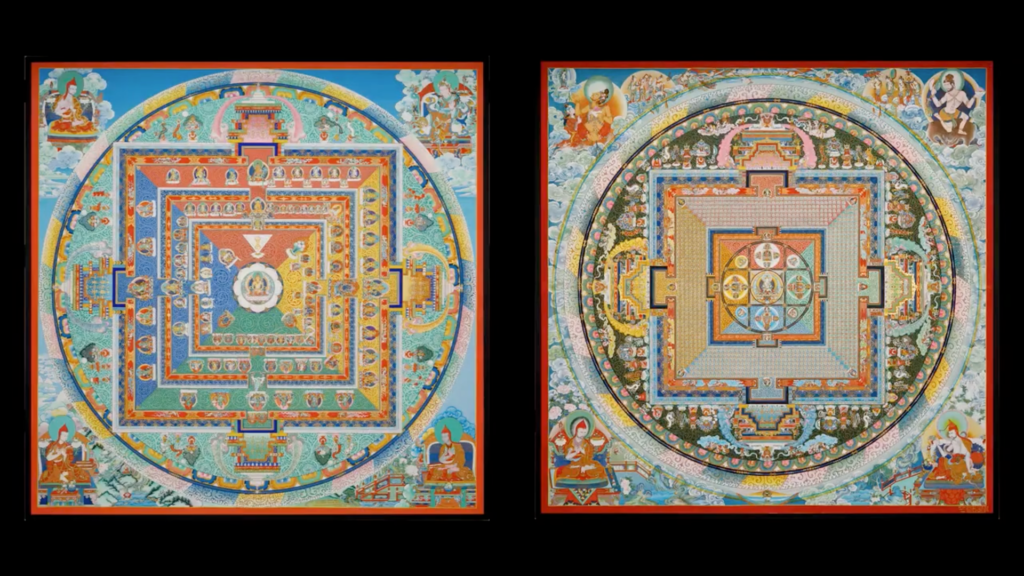
Lama Shashi Dhoj gained international recognition when he painted four large mandalas for the Toga Meiso no Sato meditation center in Japan, fostering cultural ties between Tukuche and Toga village in Toyama prefecture. These expansive mandalas each 4 x 4 meter along with accompanying Thangka depict profound Buddhist themes including the Bardo Shitro (Zhitro Mandala), Sukhavati (Amitabha’s Pure Land), and the Vajradhatu and Garbhadhatu Mandalas.
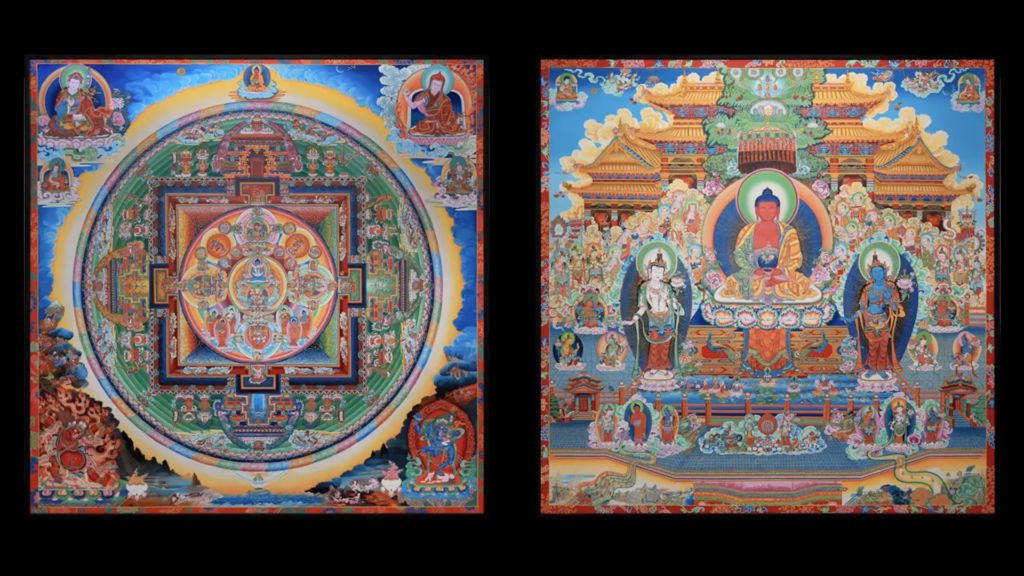
Painted over eighteen months in 1988 and 1989 alongside his brother Chakra Dhoj Tulachan, they remain the spiritual centrepiece of the meditation centre. He returned to Toga in 1994 to paint a Mandala of the Two Realms, combining Japanese and Tibetan artistic sensibilities in a work of rare cultural synthesis.
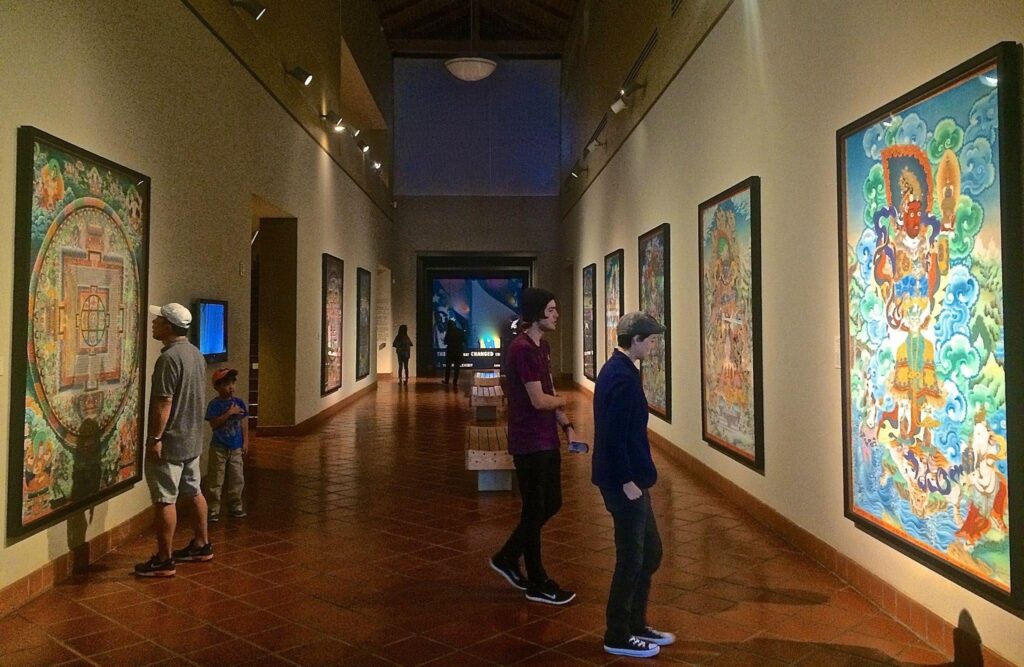
In 2013, he created nine large Thangka paintings for collectors Gayle and Edward P. Roski, works that have since been exhibited at the Bowers Museum in Santa Ana, California as Sacred Realms: Temple Murals. In 2019, this collection was displayed alongside the Garden of Soul by designer Anne Shih. The collection was reopened on January 27, 2024, continuing to share Lama Shashi Dhoj’s art and spiritual vision with new audiences far from the Kali Gandaki valley.
Legacy of Lama Shashi Dhoj
Among his notable works is Rigsum Gonpo, an early thangka from 1973, created with mineral pigments on canvas and embellished with 24-carat pure gold. This painting depicts the Lords of the Three Families-Chenrezig (Avalokiteshvara), Manjushri, and Vajrapani-symbolizing compassion, wisdom, and power.
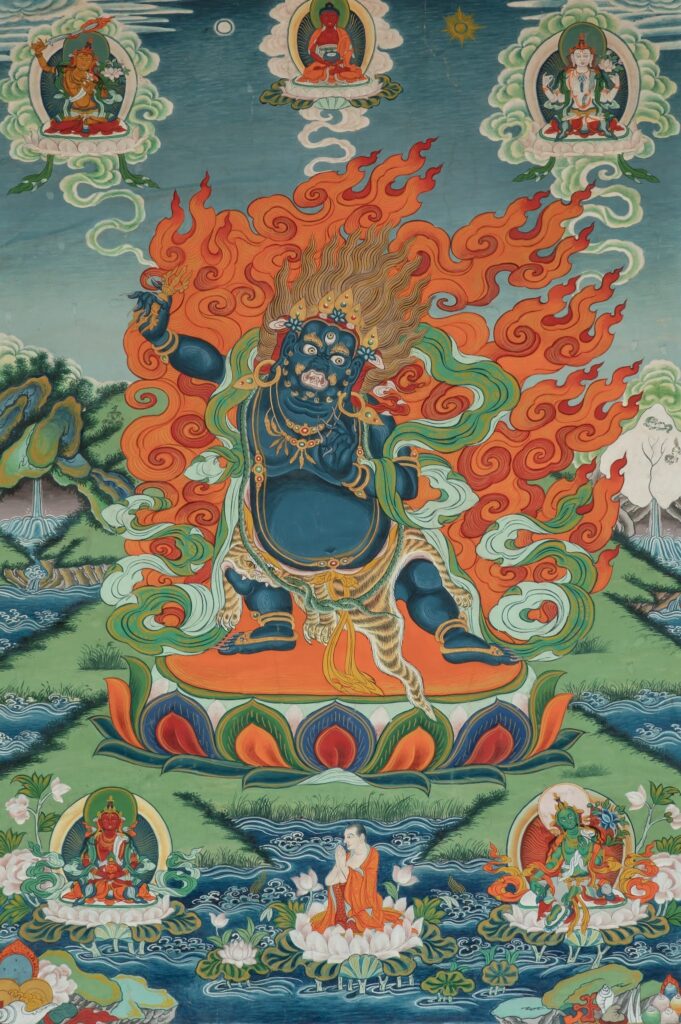
At its center is Bodhisattva Vajrapani, the King of Yakshas, Lord of Secrets and Protector of Tantric Teaching. He is the embodiment of the collective power of all Buddhas and symbolizes the energy of the enlightened mind, capable of piercing through delusion. Vajrapani engages in a spiritual battle against ignorance, craving and samsara, making him a revered protector and remover of obstacles.
Above him are Manjushri, Buddha Amitabha, and Chenrezig; below are Buddha Amitayus, a devotee at the bottom centre, and Green Tara, forming a sacred assembly rich in symbolism.
This composition follows canonical iconography with precision, and Lama Shashi Dhoj’s detailed execution and use of pure gold elevate the work’s visual and ritual significance, as use of pure gold is supposed to cleanse the entire painting and keep it pure.
Teaching at Vulture Peak, Rajagriha
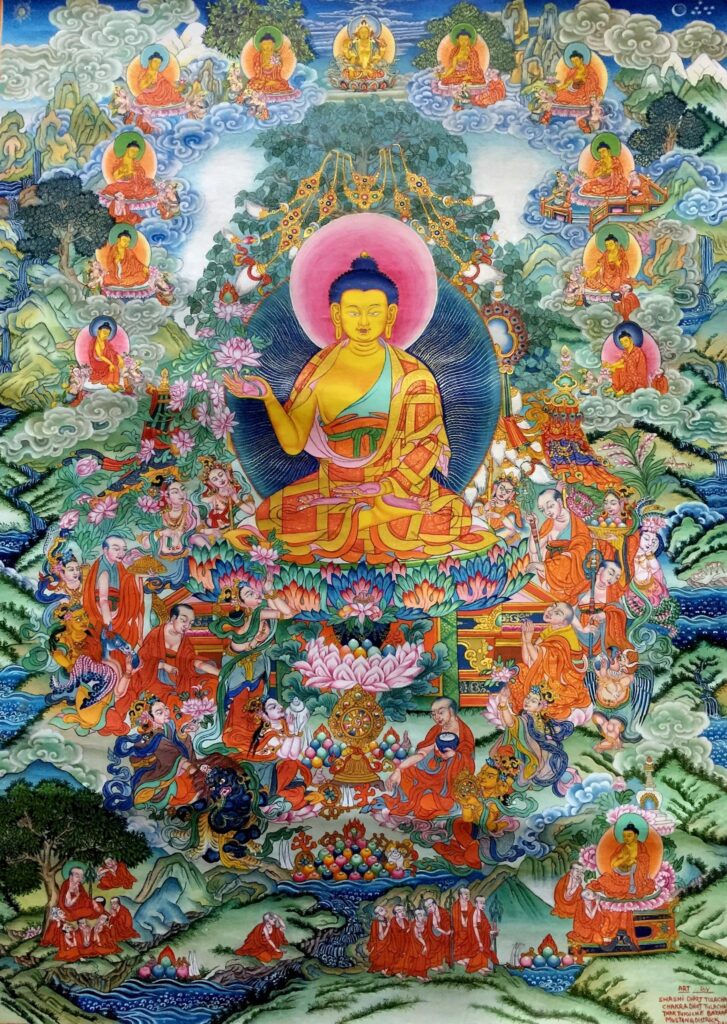
From his recent series of twelve paintings depicting the life story of Buddha, this work illustrates the moment when Shakyamuni gave teaching on emptiness and the Prajñāpāramitā Sutras, including the Heart Sutra, Lotus Sutra, Samadhiraja Sutra, Diamond Sutra, and Vimalakirti Sutra, thus turning the wheel of the Dharma for the second time on the Vulture Peak, near Rajagriha, the ancient capital of Magadha.
In this composition, Buddha Shakyamuni is shown seated in vajra posture upon a white moon disc and a multicolored lotus throne, supported by a large, jewel-adorned tree. He wears the three red monastic robes and a green undergarment; his left hand rests in his lap, while his right holds a single lotus blossom, symbolizing the ineffable nature of the wisdom of emptiness. In the upper part of the thangka are the ten images of the Buddha appear among the clouds, evoking the ten directions of space and the universal dimensions of Buddhist law, a motif that conveys the universality of the Dharma.
At the top center is the deity Prajñāpāramitā, who appears yellow in color with four hands, personifying transcendent wisdom. Below, is an assembly of arhats, shravaka monks and celestial and mythical beings gathered from all directions bear witness to the teaching, and present precious offerings such as conch shell, wheel, lotus, banners, and more. Many devotees wear monastic robes, while others are depicted in royal or celestial attire. The scene unfolds against a landscape of hills and flowing rivers; at the forefront are the seven insignia of the chakravartin, symbolizing the universal monarch.
The painting’s vibrant palette is dominated by reds, blues, greens, and oranges, bringing the canvas to life. True to tradition, Lama Shashi Dhoj uses mineral pigments and 24-carat gold on handmade cotton canvas. At the lower right is the signature of both Lama Shashi Dhoj and his brother Chakra Dhoj, typically inscribed in red paint at the bottom, an uncommon and personal touch in thangka art that marks the work as part of their shared legacy.
The World that Shaped the Work
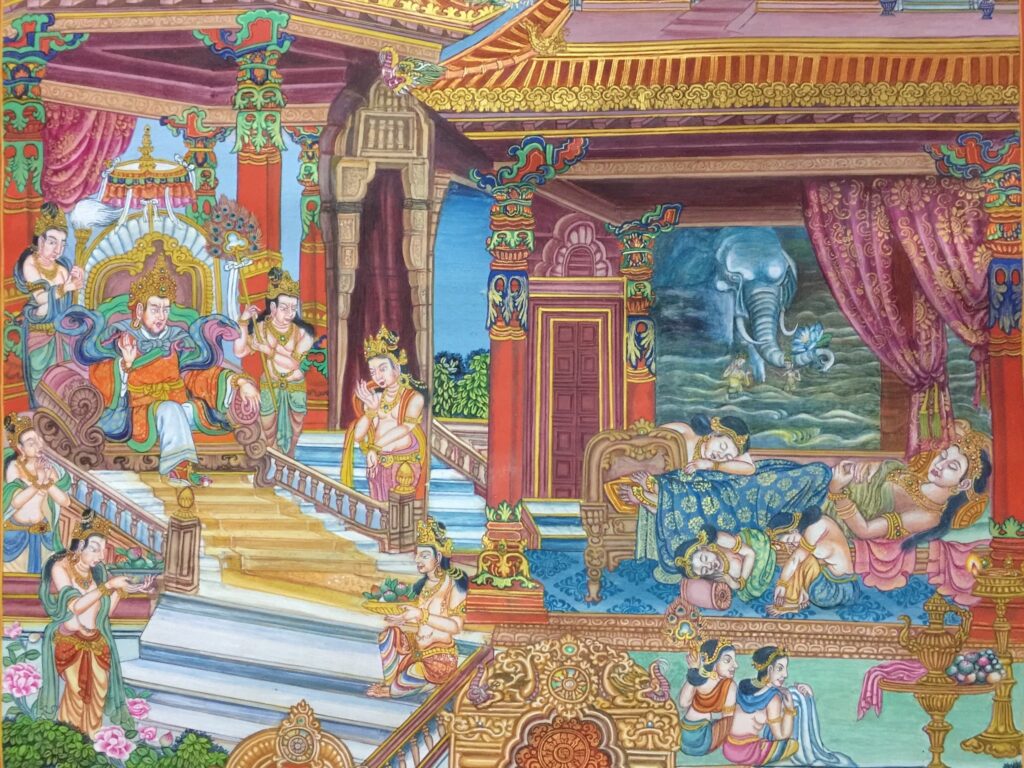
What makes Lama Shashi Dhoj’s paintings unmistakably his own is their quiet cross-cultural depth. His compositions carry intricate architectural details inspired by Mustang’s monasteries, and at times include Hindu deities such as Shiva, Brahma, and Indra, reflecting the syncretic spiritual environment of the region where religious traditions have always coexisted and conversed. His travels to Japan, Tibet, the West, and the Middle East have also left subtle imprints on his art, visible in the architecture, attire, jewelry, facial features, and expressions of the figures he paints. This cross-cultural tapestry enriches his work, making each painting a vibrant testament to his personal artistic journey as much as to the canonical tradition he works within.
Restorer, Teacher, and Keeper of Sacred Spaces
Lama Shashi Dhoj’s relationship with Chhairo Gompa is perhaps the most extraordinary chapter of his life. Founded in the 17th-18th CE by Lama Chhiwang Thilen, Chhairo was the first Nyingma monastery established in Lower Mustang. For generations it was a living centre of Buddhist practice and learning in the valley. But as the ancient salt trade routes declined and the Mustang pass closed following the Tibetan rebellions of the late 1950s, the monastery’s influence faded, its community dispersed, and much of its complex fell to ruin.
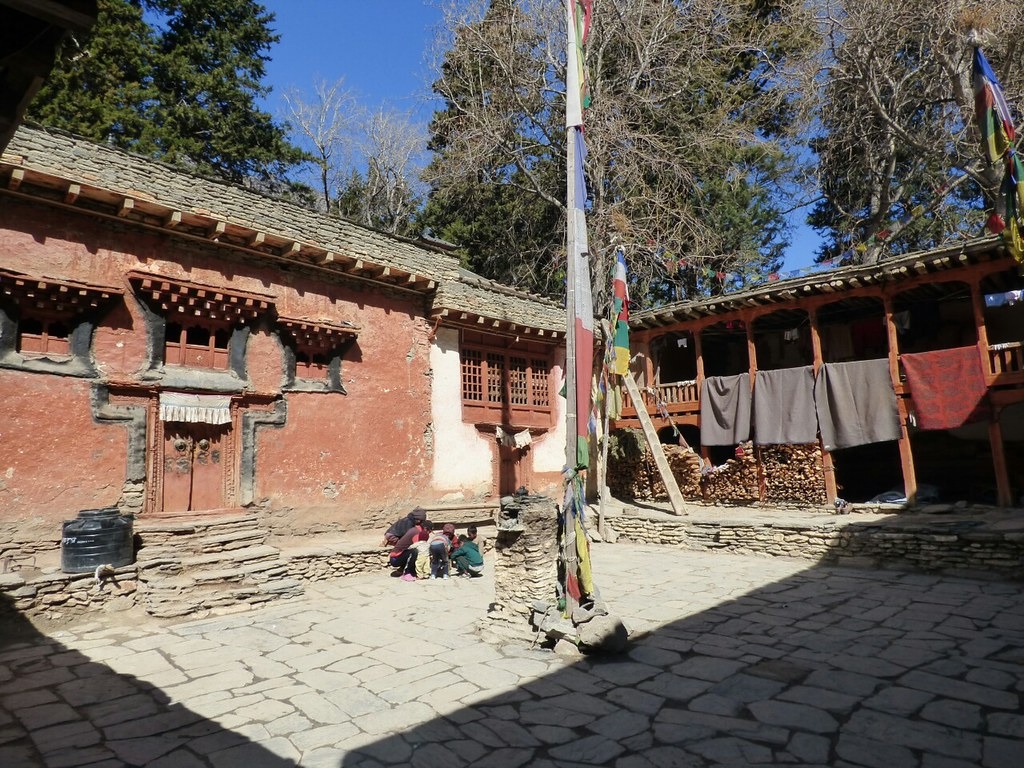
When the third incarnator, Rajendra Bhattachan, chose not to take monastic vows, he passed responsibility for Chhairo to Lama Shashi Dho, who came from a family closely tied to the monastery. His grandfather Dharma Dhoj had conducted puja there, and his father Kamal Dhoj had assisted him. So, naturally, Lama Shashi Dhoj took the responsibility.
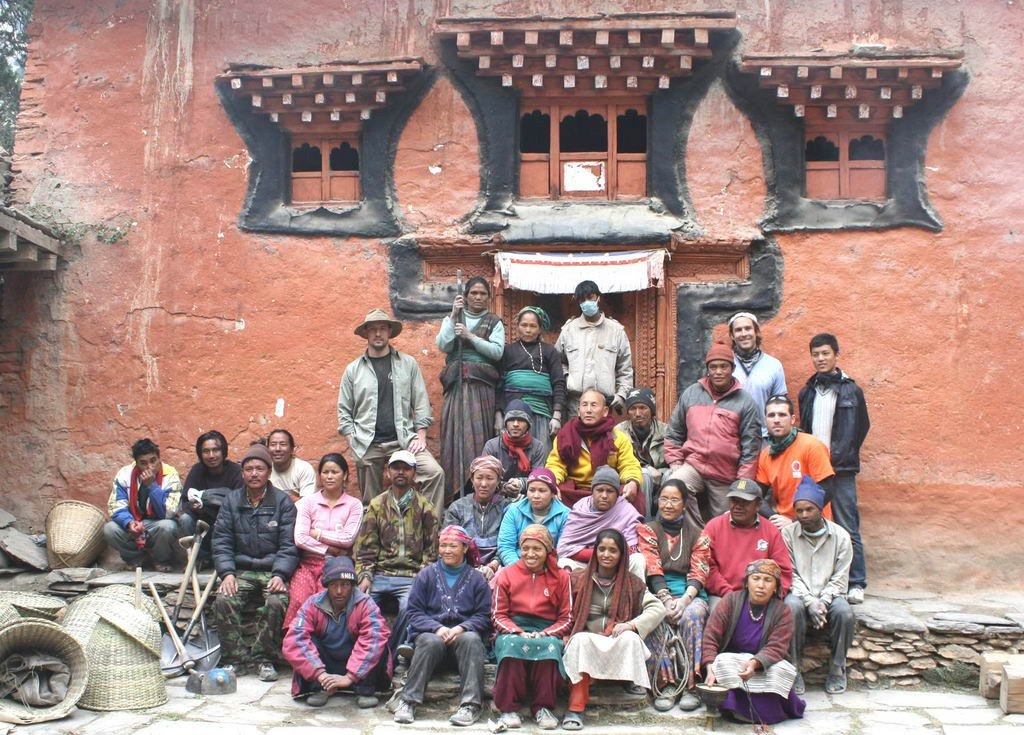
He devoted some of his most precious years to the monastery. In the 1990s, he began revival efforts that grew into a sustained project by 2004. He brought together international volunteers and local craftsmen, working with traditional materials. He also painted the murals inside the gompa himself and dedicated years of work to the site. He aimed not only to repair the structures but to re-establish a living monastic community and restore its original purpose.
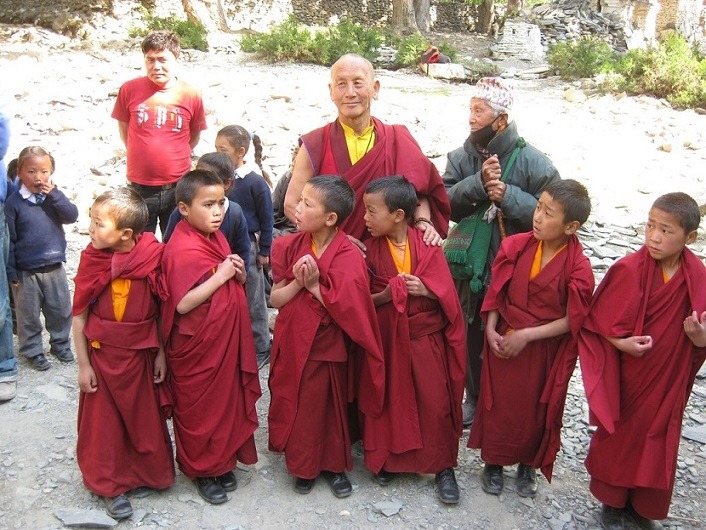
He carried this commitment into teaching. In 2012, he took in six young boys from mid-western Nepal as students. He taught them thangka painting along with discipline and devotion. Through this, he continued the lineage he inherited from his father, Kamal Dhoj, and ensured that the practice would carry forward.
Continuity…
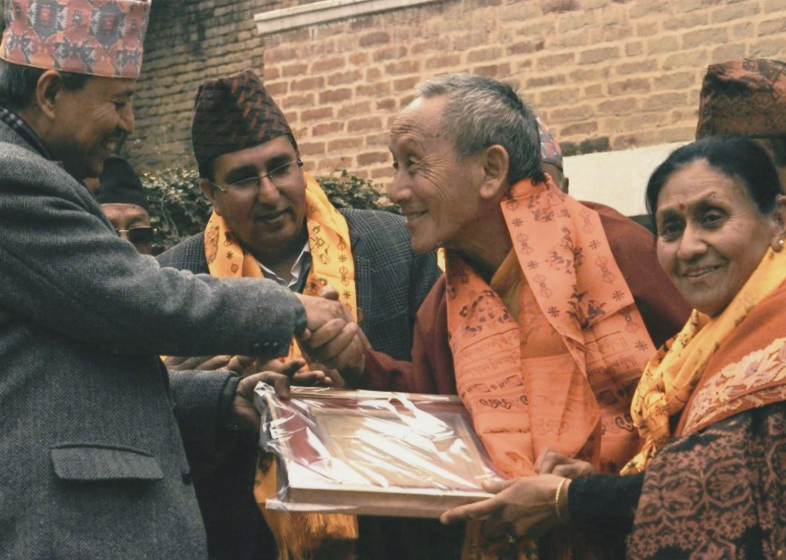
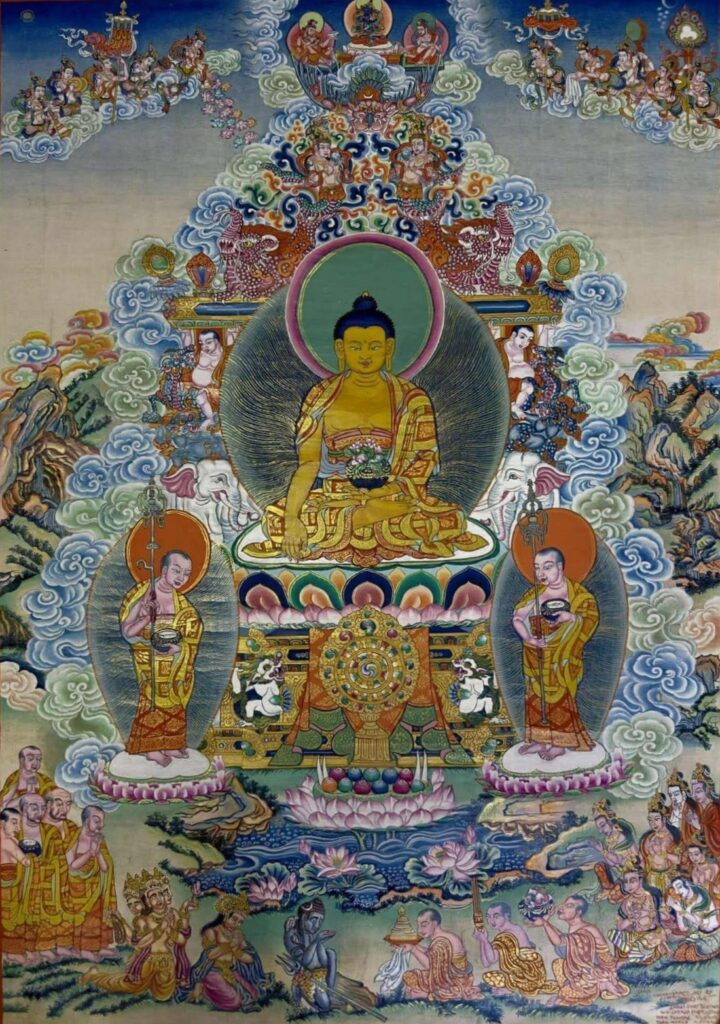
Today, even in his eighties, Lama Shashi Dhoj remains passionately engaged in art. He has recently completed his series of twelve paintings depicting the life story of the Buddha. Works from this series have already been acquired by collectors, reflecting the continued appreciation for his vision. While his recent works may not possess the same technical refinement as his earlier masterpieces, they unmistakably bear the hallmarks of his lifelong mastery.
Lama Shashi remains a stalwart of Buddhist artistry, driven by a passionate dedication to Thangka painting and fulfilling his father’s wish to revitalize traditional art forms. His commitment to creating, teaching, and preserving age-old traditions remains unwavering. Despite international recognition and invitations from Japan and the West, he has remained true to his calling, painting religious masterpieces, serving humanity, and immersing himself in the Dharma as a devoted monk and artist. He did not choose art as a career. He inherited it as a sacred responsibility and he has carried it, with devotion, for over seven decades.
At the Himalayan Art Council, documenting and archiving the legacy of personalities like Lama Shashi Dhoj Tulachan is one of our primary objectives. Artists like him are not merely practitioners of a lineage. They are the living soul of Himalayan art and culture, the ones who carry its legacy forward with every brushstroke, every prayer, and every painting offered to the world. Through research, documentation, and exhibitions, HAC remains committed to ensuring that such legacies are preserved, studied, and shared; not only for the generations who walk these Himalayas today, but for all those who will come after.
References
https://www.facebook.com/groups/2430174925/media
https://www.facebook.com/RestorationWorksInternational/photos
https://www.facebook.com/share/v/14ZEBgPbYeS
Restoration Works International