
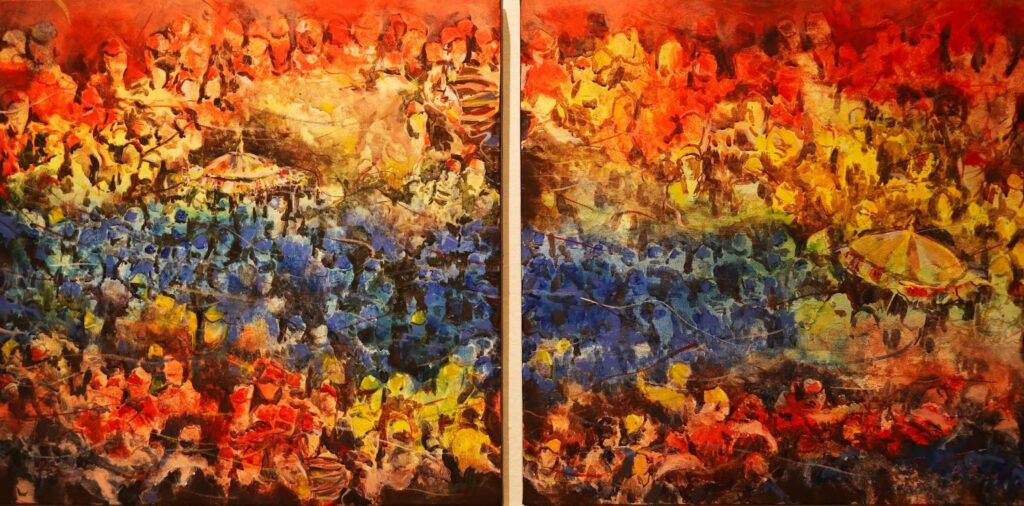
Key Takeaways
- Pāhāchahre is a three-day Newa festival rooted in the agricultural transition between spring and summer, when communities are seasonally free and disease threats historically peak, making purification and communal solidarity both spiritually and practically urgent.
- The festival begins with the worship of Luku Mahadyah, the Hiding Shiva, where tantric rituals and offerings transform destructive energy into protection.
- Over three days, possession dances, processions, and the ritual feeding of children (Marja Nakegu) unfold, alongside Ghode Jatra at Tundikhel, bringing together myth, protection measures, and public spectacle.
- At Asantole, the festival reaches its peak with the annual meeting of the sister goddesses, whose story of hospitality, humiliation, and unresolved family honour gives Pāhāchahre its most unique festival dimension.
- Celebrated by Newa communities across Hindu and Buddhist traditions, Pāhāchahre reflects the syncretic culture of Nepal Mandal, where shared ritual, artistic expression and communal life remain deeply interconnected.
“In the Kathmandu Valley, where the sacred and the everyday have always moved in close company, the festival calendar is never merely a record of dates. Each celebration is a living thread in a larger weave of mythology, community life, artistic tradition, and shared memory. Pāhāchahre, observed on the fourteenth day of the waning moon in Chaitra, is one such festival, intimate in its domestic spirit, yet grand in its public expression.”
Pāhāchahre, also known as Pāhān Charhe or Pāsā Charhe, unfolds over three days beginning on Krishna Paksha Chaturdashi, typically falling between late March and early April. And like most festivals of the Kathmandu Valley, it is rooted in the rhythms of the agricultural calendar.
Nepal follows six seasons: Basanta (spring), Grishma (summer), Barsha (monsoon), Sharad (autumn), Hemanta (pre-winter), and Shishir (winter). Pāhāchahre falls at the cusp between Basanta and Grishma, as spring gives way to the first heat of summer.
By this time, winter crops have been harvested, and the monsoon has not yet arrived. Fields remain idle, and dust and heat define the environment. This period has historically been associated with the spread of disease before the cleansing rains. The festival responds through practices that emphasise purification, protection, and collective care.
A Festival of Names
The very name of the festival carries its meaning plainly. In Nepal Bhasa, the indigenous language of the Newa people, pāhān means guest and pāsā means friend. Together, they define the festival’s essential character: an invitation.
Households are cleaned and prepared. Families invite relatives and welcome married daughters back to their natal homes. These actions form the core of the festival. Hospitality operates as a structured practice that restores social ties and reinforces community cohesion at a moment of seasonal transition.
This domestic hospitality is not incidental to the festival. It is the festival.
Cycles of Gathering: Household and Divine
Pāhāchahre unfolds over three days. It begins with the worship of Luku Mahadyah and continues with communal feasting and public processions. This sequence connects household ritual with the movement of deities through the city.
Ajimā, the grandmother goddesses of the valley, along with forms of Ganesh and Bhairav, are carried out from their temples and taken through neighbourhood routes. Processions converge at key sites such as Tundikhel and Asan, where rituals of meeting, circumambulation, and exchange take place. These movements reflect and shapes Pāhāchahre as a festival of meeting, exchange, and renewal across human and sacred worlds
The Hidden God: Luku Mahadyah
The festival opens with the worship of Luku Mahadyah, which literally means Hiding Shiva.
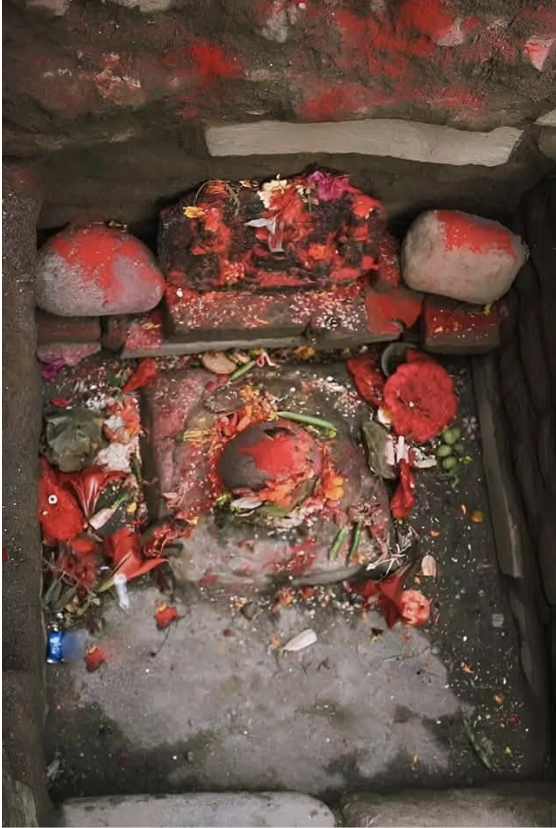
Luku Mahadyah is a concealed form of Mahadev (Shiva). Unlike grand public images of Shaiva practice, Luku Mahadyah resides in humble, liminal spaces such as neighbourhood sagas (waste grounds), forgotten corners, and impure sites. The deity is represented by a simple stone lingam, often covered or hidden from plain sight.
The name is also associated with lukubi, the Newari word for sunset, pointing to the hour of worship, when the boundary between the visible and invisible world grows thin.
Licchavi-period inscriptions near Pashupatinath’s Aryaghat refer to this class of deity as Parthiva Shila, the stone image within the earth, suggesting that the veneration of underground Shiva forms predates the valley’s better-documented religious monuments.
This ritual falls on Chaitra Krishna Paksha Chaturdashi,, also known as Pisach Chaturdashi, the Evil Spirits’ Fourteenth. Within local cosmology, this moment marks a peak of pisach or disruptive negative energy. It falls precisely in those hot, dry pre-monsoon weeks when environmental and health risks intensify, the weeks historically associated with outbreaks of cholera, dysentery, and typhoid.
Cleaning, Gathering, and Renewal
Preparation begins with the cleaning of homes, courtyards, and shrine areas. This act carries ritual significance. It marks the removal of accumulated impurity and establishes a renewed environment for both domestic and sacred activity.
In some traditions, Pāhāchahre is also associated with bhumi Puja, earth worship, where creatures such as frogs (pāhān byān) and insects (pāhān ki), that live beneath the earth and emerge with the warming season, are remembered and honoured as part of this day’s observance, reflecting a reverence for biological life that connects the festival to its deepest agricultural and ecological roots.
Families gather and share meals with invited guests and then visit local temples and participate in neighbourhood processions. These practices integrate household ritual with collective observance and reinforce systems of care during a vulnerable seasonal period.
The Offerings: A Forbidden Feast
The worship of Luku Mahadyah involves offerings that differ from normal Shaiva practice. Meat, garlic, and alcohol are placed before the deity. The seasonal blooms of mustard, lumbuṅ, symbolising gold and radish, wahabuṅ, symbolising silver are also offered and even used for decoration. Other items include lābā (garlic greens) and laishu (sun-dried radish). Hese special seasonal delicacies are central to both the ritual and communal feast that follows. Earlier practices included offerings such as wild boar meat, indicating a broader sacrificial spectrum that has since faded.
This “forbidden feast” follows a tantric practice that engages substances typically considered impure. By deliberately engaging with what is usually avoided, restores balance and ward off harm. As Lord of the Pisachs, Luku Mahadyah receives these offerings to stabilize and redirect harmful energies into protective force.
Texts such as Mahakal Tantre Shiva Bachan describe these offerings and prescribe the application of lampblack from ritual lamps to the eyes before visiting Ajimā shrines as a means of attaining protection and wellbeing.
The Lamp and the Lampblack
Oil lamps burn through the night at Luku Mahadyah shrines. The lampblack is collected, mixed with oil, and applied around the eyes, particularly, those of children. A Newari saying carries the belief: “dhun ya mikha kan kan, chun ya mikha tyela” smoky eyes are bright; clear eyes are sharp. The practice carries both symbolic and practical value, particularly in preventing eye infections common during the dry, dusty season.
The Atmosphere of the First Evening
As evening falls, neighbourhood squares and courtyards fill with families gathered at Luku Mahadyah shrines. The nay khin baja, a traditional Newa musical ensemble, begins to play in the lanes. Among the Jyapu farming community, a song is sung in a melody of deep, compassionate sorrow: “hē rām gan wane, gan chowane, thāsa madu daib”, O Ram, where to go, where to stay, there is no place to call home. It is a song that acknowledges the uncertainty of this season, the vulnerability of life’s turning points, and the longing for shelter and belonging that Pāhāchahre itself, with its open doors and invited guests, seeks to answer.
After the worship, families sit down with their guests for the feast, sharing the very foods offered to the hidden god. The meal is both offering and reunion, a single act that honours the divine and strengthens the bonds.
Mythology of the Hidden God
Two mythological stories frame the character of Luku Mahadyah and the unusual nature of his worship.
In one account, Parvati questions Shiva’s abstention from foods she herself consumes.
“You are Mahadev,” she said, “lord of all gods, and I am fortunate to be your companion. Yet from time to time I take different forms and enjoy meat and wine. You never partake of these things, and it makes me feel uneasy between us.”
Shiva responds by secretly taking a pisach form and consuming meat and alcohol in concealment. This narrative establishes the legitimacy of offering such substances to the hidden form of the deity.
The second narrative recounts the story of asura Bhasmasur, who undertook intense austerities, fasting, meditating, and devoting himself to Shiva for many years. Pleased by his devotion, Shiva granted him a boon: anyone whose head he touched would instantly turn to ashes.
Almost immediately, Bhasmasur sought to test his power on Shiva himself. Realising the danger, Shiva fled and, according to local telling, hid in a place of filth and refuge, becoming the concealed presence remembered as Luku Mahadyah.
At this moment of crisis, Lord Vishnu intervened in the form of Mohini, his enchanting female manifestation. Appearing as a beautiful dancer, Mohini lured him away and invited him to imitate her movements. Captivated, the asura followed. At the final moment, she placed her hand upon her own head. Without hesitation, Bhasmasur did the same and was instantly reduced to ashes by his own boon.
Within the context of Pāhāchahre, the story explains both Shiva’s hidden, earthly form and the transformation of dangerous power into protection through ritual and wisdom.
Ajimā, Masked Dances, and Embodied Presence
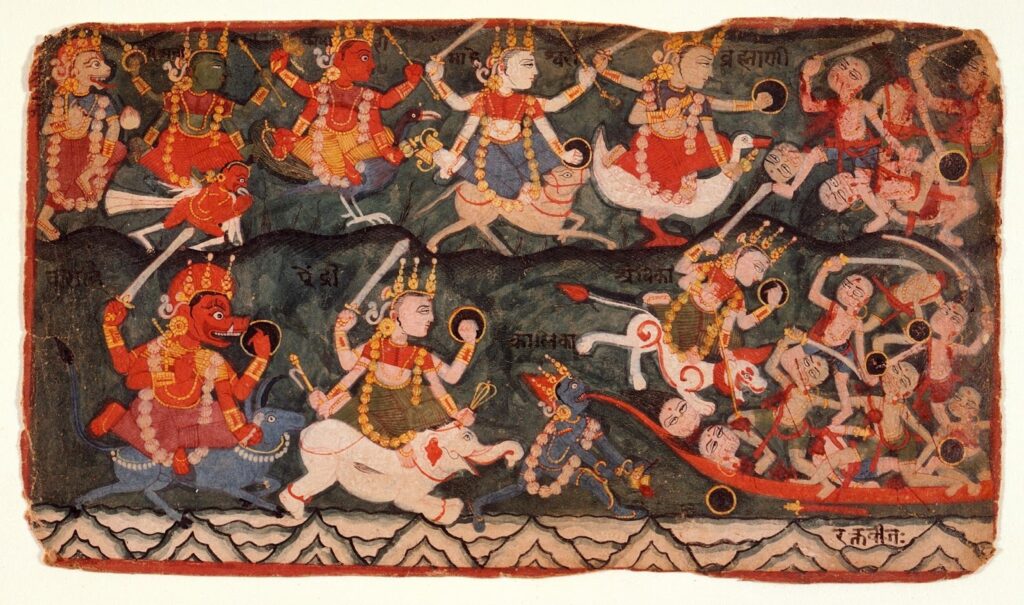
Following the worship of Luku Mahadyah, families make their way to the temples of Ajimā to seek her blessings before the greater rituals of the night unfolds.
The Ajima, or “grandmother” goddesses of the Kathmandu Valley, occupy a complex position within the ritual landscape of Nepal Mandal. They are not distant, benevolent figures. Within Newa Cosmology, they exist alongside and are often indistinguishable from the wider field of pisāch, bhūta, and restless spirits that inhabit crossroads, thresholds, and the margins of settlement.
These entities, whether named as goddesses or spirits, share a common capacity. They can both protect and harm. They control disease, misfortune, and psychological disturbance. Illness, particularly in the dry season before the monsoon, is not seen purely as biological, but as relational, emerging from imbalance between human, environmental, and unseen forces.
Within this framework, ritual does not simply worship the divine. It pacifies, feeds, and negotiates with volatile presences.
Nar Devi and the Possession Dances
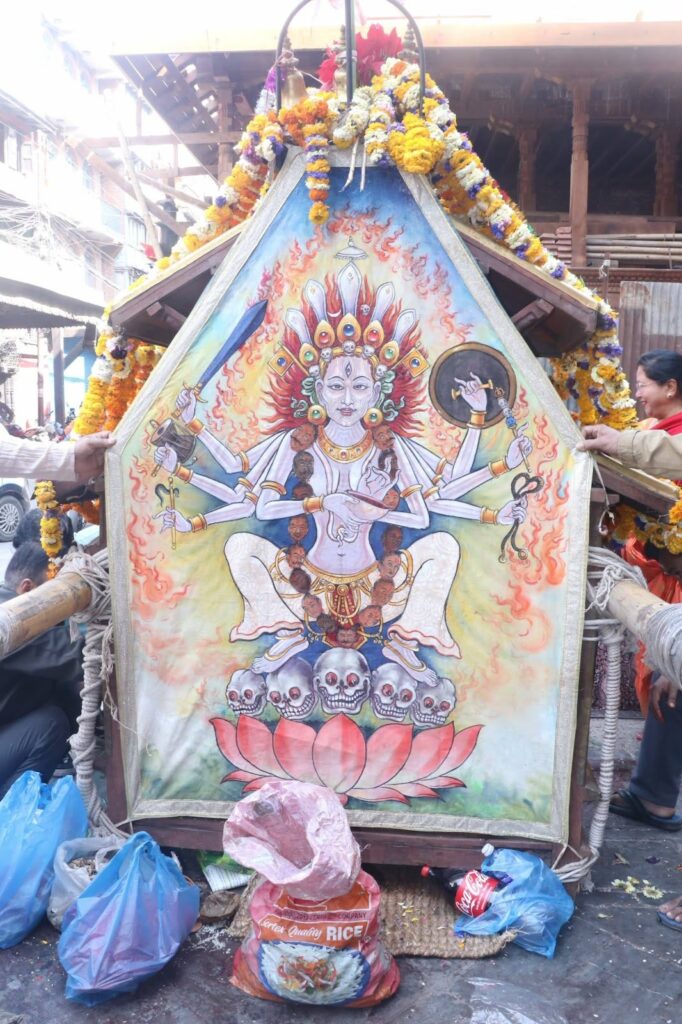
Pattachitra of Nyatabhulu Ajima, Naradevi
The most intense manifestation of the divine occurs at Nar Devi, where Neta Madhu Ajimā presides. Historically associated with extreme forms of sacrifice, including accounts of human offerings, the goddess continues to receive blood sacrifice today. Buffaloes and goats are offered, sustaining a ritual structure in which life-force is transferred to appease and stabilise the deity.
On the night of Pisach Chaturdashi, masked dancers gather at Nar Devi Tole near her temple. These performers represent twelve different deities, with Neta Ajima as the dominant presence. Through elaborate masks and costumes, they embody these divine figures and begin ritual dances that continue through the night and into the following morning.
These are not theatrical performances.
Once ritually prepared, the dancers enter states of possession. Blood from sacrificed animals is consumed as a medium through which the deity enters the body. When the possession takes hold, movement transforms, becoming erratic, forceful, and often beyond control. Vomiting is interpreted as a sign that the deity has not entered. These thresholds between control and surrender form an essential part of the ritual logic.
Similar possession dances activate local Ajimās simultaneously at Halchok, Tokha, and Thecho, creating a dispersed but coordinated field of protection across the valley.
Khat Processions: Movement of the Goddesses
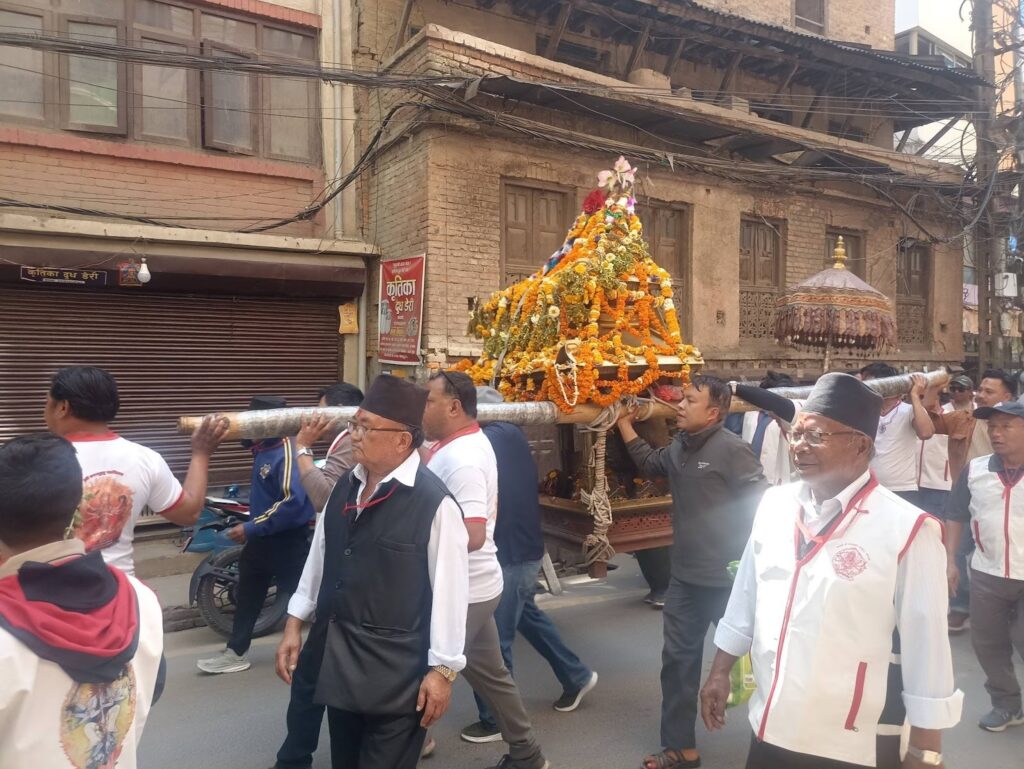
Across the city, the goddesses are taken around their respective communities in khat, a miniature portable temple, constructed with wood and ornate metal detailing, and textile canopies. They are mounted on long poles and carried on the shoulders of groups of men, typically organised through guthi lineages.
The movement of a khat is physical and unstable. It sways, tilts, and surges forward as bearers respond to its weight, rhythm, and the pressure of the crowd. Each Ajimā emerges from her own locality, accompanied by musicians, devotees, and torchbearers.
A City Alive Through the Night
As midnight passes, the different streams of activity begin to overlap and converge. Lamps burn at Luku Mahadyah shrines. Masked dancers reach the height of possession in temple courtyards. Khats pause at key intersections to give blessings. What began as a private household ritual has scaled outward, layer by layer, into a city-wide embodied enactment of protection. The private and the public, the intimate and the collective, the hidden and the spectacular, all coexist in the same night.
Through these rituals, the Ajimās are invoked to confront the disease, misfortune, and disruptive forces that peak during this seasonal transition. The masked dances extend Pāhāchahre into a collective, embodied practice, one in which the goddesses take actual form in the bodies of their dancers and actively enforce the protection of the community.
Ghode Jatra: The festival of Horses
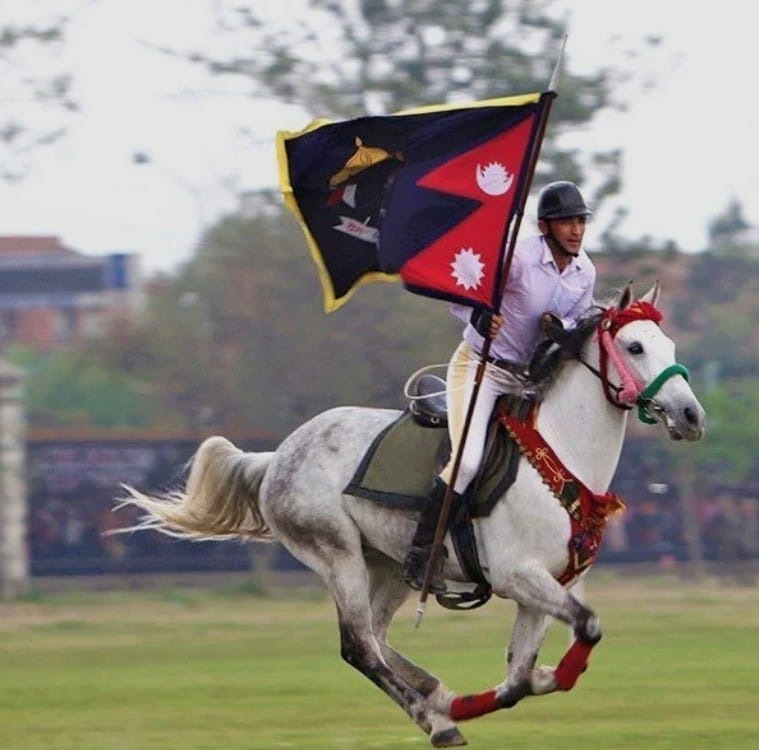
The second day of Pāhāchahre coincides with Ghode Jatra, celebrated on Aunsi, the fifteenth and final day of the dark fortnight in Chaitra. Known as the Festival of Horses, it draws together ritual, spectacle, and communal celebration on the Tundikhel, the great open ground at the heart of Kathmandu.
The Tundikhel is a place that carries the weight of history in its soil. Once bordering the eastern edge of old Kathmandu, it is now the central point of the city, and was reputed in former times to be the largest parade ground in all of Asia.
The Demon Tundi and the Founding of the Festival
According to Newa folklore, a demon named Tundi once terrorized the community by snatching children. Villagers eventually lured him to Tundikhel, where galloping horses trampled him to death. His massive body was buried beneath a tree to suppress his vengeful spirit.
The annual horse races reenact this triumph. The thundering hooves symbolically keep Tundi’s spirit subdued. Many believe that the faster the horses run, the more decisively the demon is subdued, and the better the omen for the year ahead. If the horses run with great speed, it is said, the people of Nepal will succeed in overcoming their enemies, and disease and misery will be driven away.
The Royal Tradition and the Kumari
During the Malla and Shah periods, Ghode Jatra carried an additional dimension of royal ceremony. It was the custom for the king of Kathmandu to ride in a courtly cavalcade to the temple of Bhadra Kali at the edge of the Tundikhel for worship on this day. The procession was led by a horse bearing the Living Goddess Kumari, whose presence sanctified the royal visit. Over time, it is thought, this ceremonial cavalcade evolved into a broader parade of horses, and from there into the horse racing and athletic contests that define the day today, organised by the military and presided over by the head of state.
From One Horse to a Parade: The Rana Transformation
For much of its earlier history, Ghode Jatra centred on a single horse race. The shift toward a larger, more elaborate event began after Jung Bahadur Rana returned from his visit to England and France in 1850. He was impressed by the scale and display of European military parades.
On his return, he introduced similar elements at Tundikhel, expanding the festival to include decorated horses, organised displays, and formal races. Over time, these changes shaped Ghode Jatra into the structured public spectacle seen today, now organised by the Nepal Army.
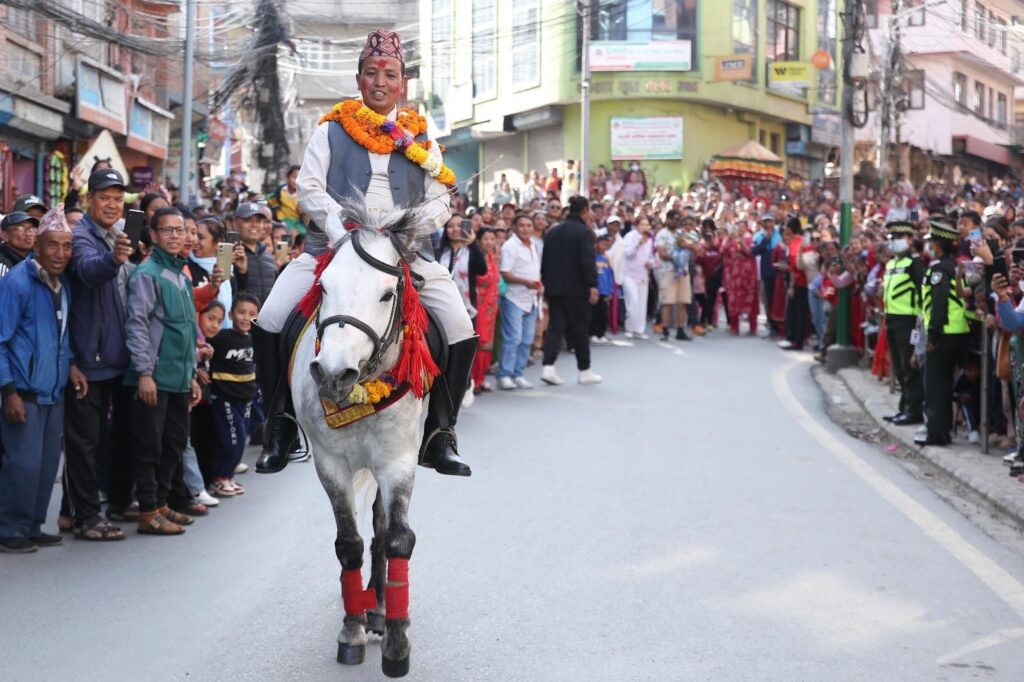
In the Bal Kumari neighbourhood of Patan, a distinctive local variation of Ghode Jatra has been observed for centuries, rooted in a piece of inter-kingdom rivalry. During the era when Kathmandu, Lalitpur, and Bhaktapur existed as separate kingdoms, residents of Patan were barred by King Pratap Malla of Kathmandu from attending the Tundikhel celebrations. To give his own people a festival in the spirit of the original, King Srinivasa Malla of Patan established a rival single-horse race, following the older custom by which only one horse was raced.
The Bal Kumari race has a character entirely its own. The horse is fed intoxicating spirits until inebriated. A rider dressed in traditional Newa costume, a full white skirt, ash coat and Nepali topi (cap), is then placed on its back. Townspeople shout and beat drums to excite and enrage the animal, which runs wildly through the streets with the riders bouncing, and clinging on, to the delight of the celebrating crowd. It is a spectacle of daring, irreverence, and communal glee, and it preserves something of the rawer, more elemental spirit of the festival before the Rana-era transformations gave it its grander military form.
Marja Nakegu: Feeding the Children
On the second day, alongside the horse races and goddess processions, is one of the festival’s most considered traditions: Marja Nakegu, the ritual feeding of young children. Marja is rice prepared through tantric ritual. Feeding this to children constitutes an act of protection, believed to guard them from illness in the year ahead. Before the meal, Kumar and Ganesh are worshipped and their blessings are invoked. The meal itself is elaborate. It typically includes twelve varieties of food, though in some communities this can extend to eighteen or even twenty-four dishes.
The Meeting at Tundikhel: The Goddesses Gather
Traditonaly, seven Ajimās formed part of the procession: Lumadhi Ajimā (Maheshwari, Shakti of Shiva), Kanga Ajimā (Varahi, Shakti of Vishnu), Mhaypi Ajimā, Takati Ajimā, Mayti Ajimā, Yatamaru Ajimā, and Bachhalā Ajimā. Borne on the shoulders of Guthi members, their khats move through the city late into the night before converging on Tundikhel for Dyah Lwākegu, the ritual meeting of the goddesses.
Today, this practice has shifted. The ceremony centres on three sisters: Kanga Ajimā, Lumadhi Ajimā, and Wotu Bhadrakali Ajimā, who are brought together for the torch exchange at Tundikhel.
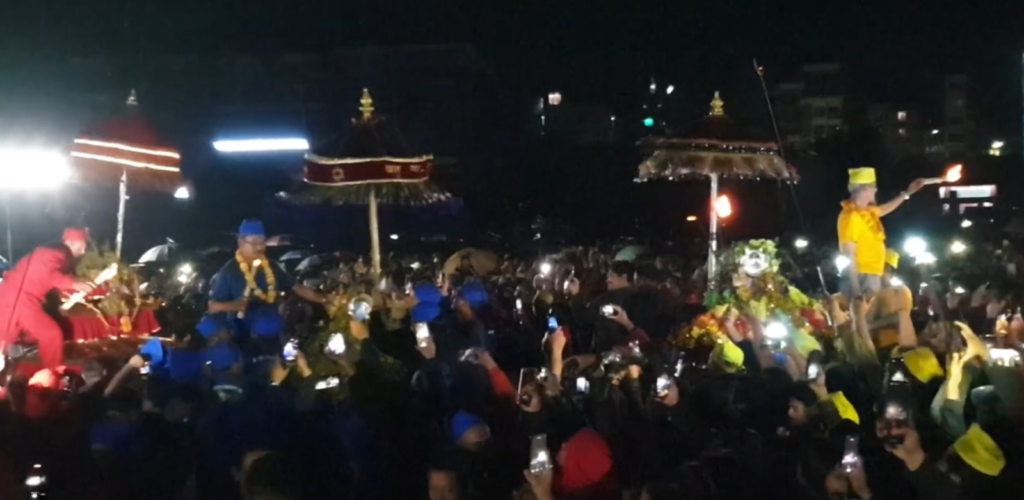
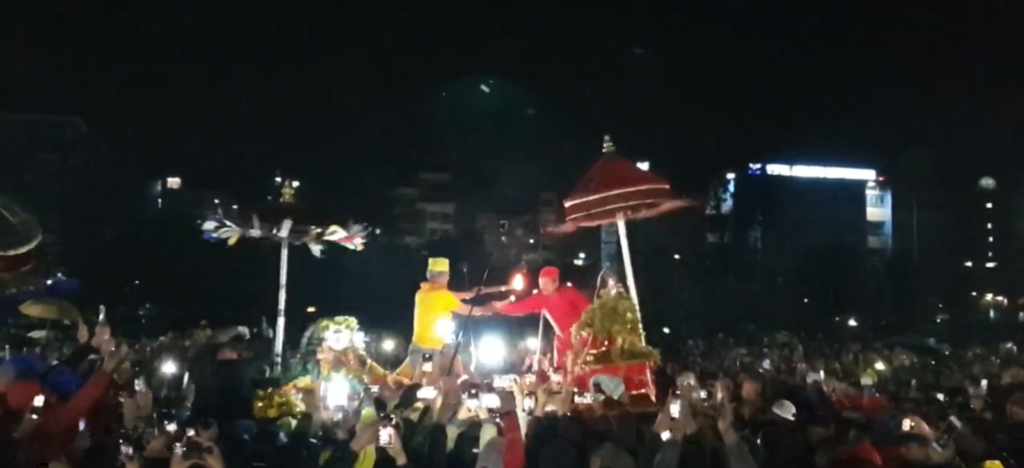
During Dyah Lwākegu, flaming torches are exchanged between the entourages of the goddesses’ palanquins. The torches pass from hand to hand in the darkness of the new moon night, marking recognition and shared presence between these divine sisters. The ritual unfolds on ground long associated with a subdued demonic force, and the goddesses who gather here are those believed to hold power over disease and the well-being of the community. With the exchange complete, the bond between them is renewed, and with it, their protective compact is renewed for another year.
The Third Day: Sisters at Asantole
The final day of Pāhāchahre brings the festival’s most visually spectacular event: the Dyah Lwākegu ceremony at Asantole, where narrow lanes converge near the ancient temple of Annapurna. It is here, in this dense and living heart of the old city, that the sister goddesses hold their one annual meeting.
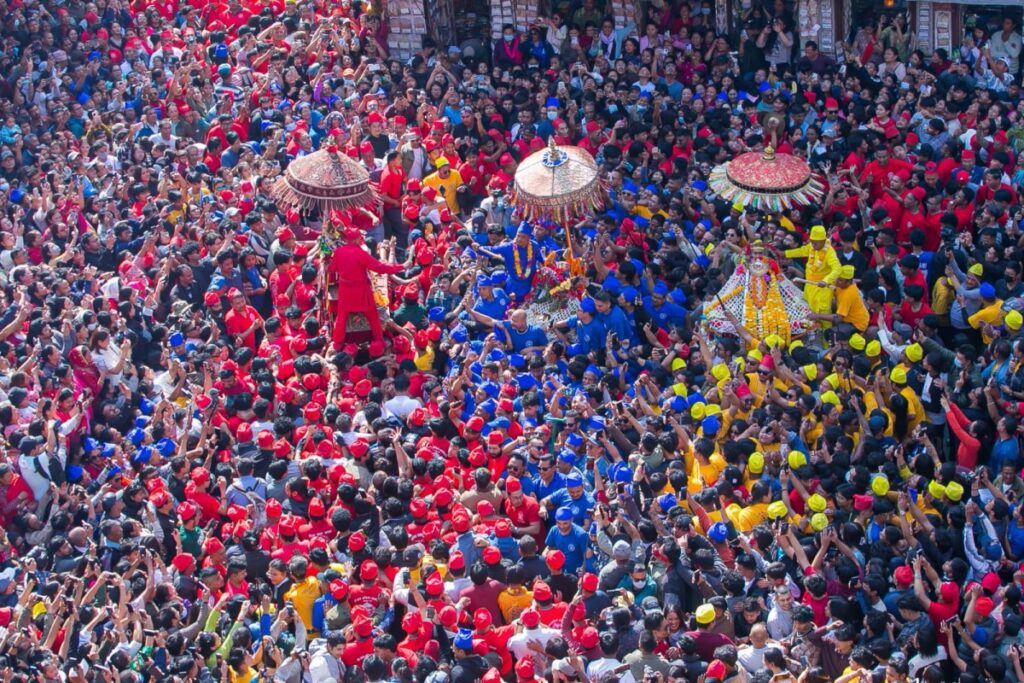
s with festive, exuberant energy. The processions zig-zag through dense crowds, the heavy khats pausing at intersections, as well as tilting and swaying. At moments, the khats lean so precariously that they seem about to crash to the ground, only to be steadied again by the bearers amid shouts and laughter from the crowd. Musicians push their way through the throng, playing traditional Newa instruments whose sound fills the narrow lanes. Women and children lean from the windows and balconies of the tall brick buildings above, watching the processions pass below.
When the goddesses finally converge at Asantole, flaming torches are exchanged between the entourages of each palanquin, a symbolic ritual of meeting and mutual recognition of the sisters. Worship rituals are performed with devotion and musical accompaniment, the square alive with the sound of drums and the light of torches. When the ritual is complete, each palanquin retraces their routes through neighbourhoods that are still crowded with devotees and celebrants to their temple.
The Absence of Indriani
Within the gathering of the sister goddesses, one presence is always missing: Indriani, also known as Luti Ajimā.
Her absence is not accidental. It is part of the ritual itself.
According to the story, Indriani once lived in poverty, a widow struggling to care for her many children. When the sisters were once invited to a feast, seven arrived adorned in their finest garments and were received with honour. But Indriani and her children came in worn, threadbare clothing and were barely acknowledged.
When her children began to cry from hunger, the host, irritated, threw pieces of stale, dry bread (dushimari) at them. One struck a child on the forehead with such force that it drew blood. As the story goes, the blood turned to gold, revealing the divine nature of the woman who had gone unrecognised. Deeply humiliated, Indriani gathered her children and left without a word.
That night, she fell asleep while cooking a simple pumpkin. By morning, it had transformed into a bottomless vessel of molten gold. Taking only what she needed, she fashioned jewels for her family and cast the rest into the Bishnumati River, which has carried the name Lu Khusi, the River of Gold, ever since.
When she next attended a feast, richly adorned, the same hosts received her with honour. She removed her gold ornaments, placed them on the table, and said that it was her wealth that had been invited, not herself. If wealth were the guest, wealth should be fed. She left and did not return. With that, she left and did not return again.
From then on, Indriani refused to join the gatherings of her sisters. In local tradition, her worship is observed separately on Bala Chaturdashi, marking a ritual distance from the collective. The youngest sister, Kankeswari, withdraws early as well, her khat carried away before the gathering settles, unwilling to remain within a conflict that cannot be resolved.
The meeting at Asan is therefore incomplete. It carries the memory of exclusion and the limits of reconciliation. The ritual preserves this fracture rather than resolving it. Indriani’s refusal becomes a form of presence: not seen in procession, not carried in a khat, not greeted among her sisters, yet she remains central to the gathering.
What the Mythology Teaches
This story gives Pāhāchahre its most human dimension. The goddesses of Nepal Mandal are not distant or untouchable. They quarrel, take offence, and carry the memory of humiliation from wounded pride. Indriani’s story is not simply a myth. It reflects what happens when a guest is reduced to appearances, when hospitality is extended to wealth rather than to the person.
Each year, in the meeting of the sisters at Asan, this memory is re-enacted. The ritual holds onto the costs of disrespect, the fragility of belonging, and the responsibility of receiving every guest with care.
“Pāhāchahre is a festival of guests, and a guest is akin to God, अतिथिदेवो भव.”
Shared Across Traditions
Like many of the valley’s major festivals, Pāhāchahre is celebrated by Newa communities of both Hindu and Buddhist backgrounds, a reflection of the syncretic religious culture that has long defined Nepal. The Hiding Shiva is worshipped at both Hindu and Buddhist sites. The grandmother goddesses draw devotees from across traditions.
The Guthi associations that organise the processions span both orientations. The festival does not ask participants to choose between traditions. It invites participation as shared ritual becomes a form of communal identity that transcends sectarian division.
Living Art, Living Festival
For those dedicated to the artistic heritage of the Himalayan world, Pāhāchahre reveals a dynamic enactment of community, ritual and renewal. Sustained by hereditary artisans, guthi members, and households through the festive masks, khat palaquins, dances and feasts form an interdependent web of practice that safeguard both culture and tradition.
As Kathmandu evolves, living tradition and festivity like Pāhāchahre endures through active participation. Art, devotion, and collective care converge not as memory alone, but through the people who continue to make, carry, perform and participate.
The Himalayan Art Council is committed to documenting and sharing the living artistic traditions of the Himalayan region. If you have photographs, recordings, or memories connected to Pāhāchahre or other local festivals, we invite you to connect with us.
Frequently Asked Questions
When is Pāhāchahre celebrated, and how long does it last?
Pāhāchahre is a three-day festival beginning on Krishna Paksha Chaturdashi, the fourteenth day of the waning moon in the Nepali month of Chaitra. In the Gregorian calendar, this typically falls between late March and early April. The three days conclude with Aunsi, the new moon day, which coincides with Ghode Jatra, the Festival of Horses.
What does the name Pāhāchahre mean?
The name comes from Nepal Bhasa, the indigenous language of the Newa people. Pāhān means guest and charhe refers to the fourteenth day of the lunar fortnight. An alternative name, Pāsā Charhe, uses pāsā, meaning friend. Together they refer to an open invitation to kin, neighbours, and friends to gather, feast, and renew their bonds.
Who are the Ajimas, and why are they central to Pāhāchahre?
The Ajimas are grandmother goddesses of the Newa tradition, each associated with a specific neighbourhood of the Kathmandu Valley. They are understood as fierce, maternal protectors who guard their communities against disease and misfortune. During Pāhāchahre, their mask dances are performed. Similarly, palanquin shrines are carried in procession on the second and third days, and the festival’s culminating ceremony at Asantole re-enacts their annual meeting through the exchange of flaming torches.
Is Pāhāchahre only celebrated by Hindus?
No. Pāhāchahre is celebrated by Newa communities of both Hindu and Buddhist backgrounds, reflecting the syncretic religious culture that has long characterised Nepal Mandal. Luku Mahadyah is worshipped at both Hindu shrines and Buddhist bahals, and the Guthi associations that organise the festival’s processions and rituals span both traditions. This shared participation is one of the festival’s most distinctive cultural features.
What is the significance of Luku Mahadyah, and why are unusual offerings made to him?
Luku Mahadyah, the Hiding Shiva, is a form of Mahadev kept in impure, liminal spaces such as neighbourhood waste grounds. He is worshipped through tantric practice using offerings like meat, garlic, and alcohol to appease Shiva and transform harmful forces into protection.